

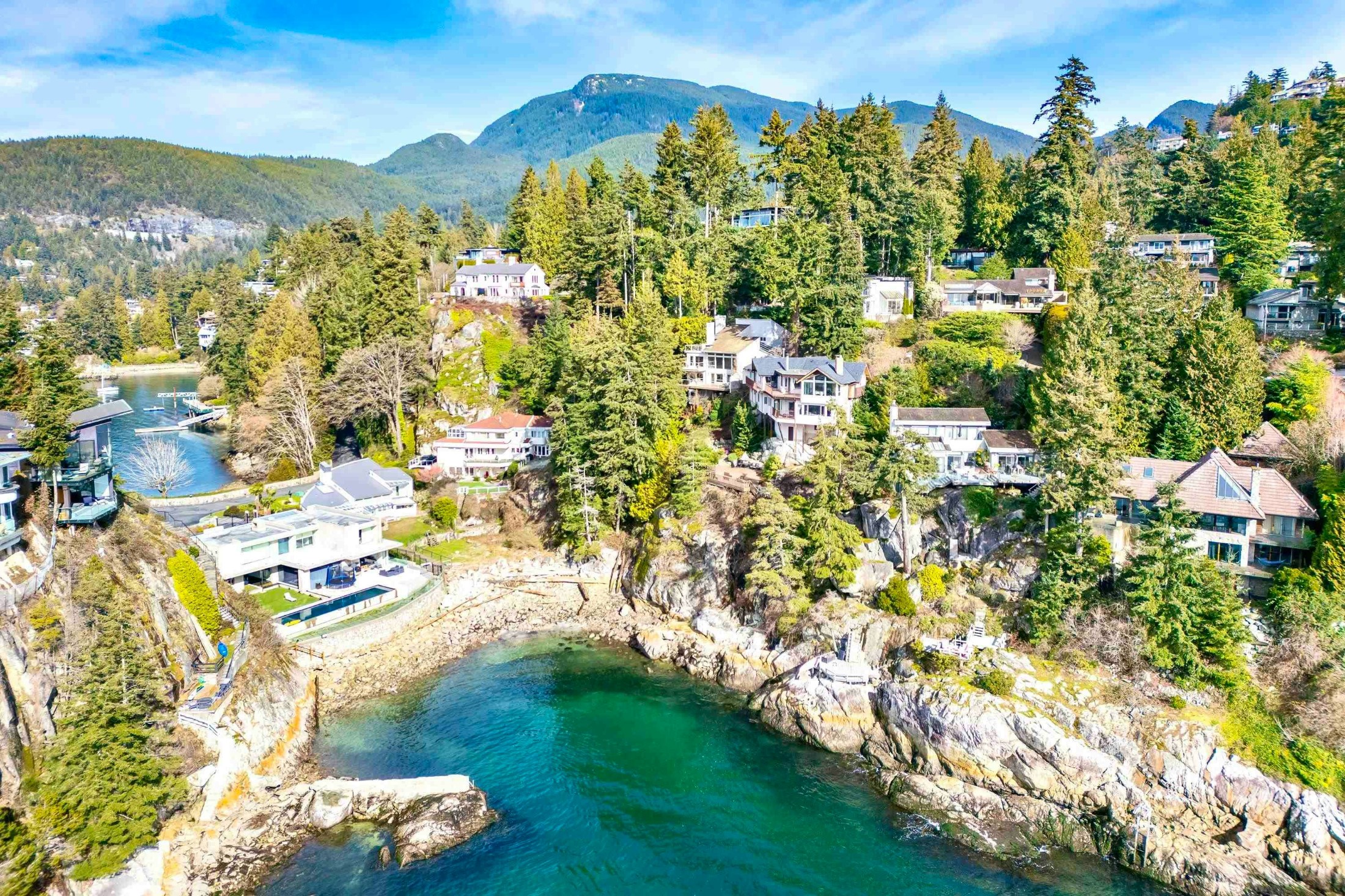
The strangest thing about living along the Sea to Sky is that, months later, it still hasn't become ordinary.
I can be driving to an appointment, thinking about work, groceries, emails or the dozen things I need to get done that day, and then I'll come around a bend on the Sea to Sky Highway and see Howe Sound opening up beside me. And I still look. Sometimes I actually laugh. Sometimes I get a little giddy. Because somehow, this is the road I get to drive home on.
But living along the Sea to Sky is very different from vacationing here. The mountains and ocean are spectacular, of course. But eventually, even the most beautiful place becomes the backdrop to real life. You still have work to do. Groceries to buy. Appointments to get to. Laundry waiting at home. And I think that's actually where the real magic of living here begins. Because the question isn't whether the Sea to Sky is beautiful. It is.
The more interesting question is: What does it actually feel like to build a life here?
The landscape becomes part of your everyday life
Before I moved here, mountains and ocean were things I travelled to see. Now they're simply... there. I wake up early, often before the rest of the world seems to be awake, make my coffee or tea and look out toward Howe Sound. Some mornings it's perfectly clear. Other mornings the clouds are hanging low over the mountains or mist is sitting over the water. The view is never quite the same.
And I don't think I understood before moving here how much your physical surroundings can influence the rhythm of your life. You don't just look at nature here. You live in it. A forest walk can be part of an ordinary morning. The ocean can be where you take the dogs. A hike doesn't necessarily require planning an entire weekend around it. Nature becomes less of an event and more of a relationship.
And for me, that has been one of the biggest changes of all.
The Sea to Sky Highway becomes part of your life too
Let's talk about the road. Because if you're considering living anywhere along the Sea to Sky corridor, Highway 99 is going to become part of your relationship with this place. It connects the communities, but it also shapes how you live. I drive it constantly. South toward Lions Bay, Horseshoe Bay, West Vancouver and the North Shore. North toward Squamish and Whistler. And yes, it is every bit as beautiful as people say.
There are still stretches where I look over at Howe Sound and think, How is this my commute?
But this is also a mountain highway. Weather can change. Traffic happens. Accidents happen. Construction happens. And there aren't endless alternative routes if something goes wrong. That's something I think people need to understand when they're looking at a map and calculating distances. Twenty or thirty kilometres here doesn't necessarily mean the same thing it does somewhere else.
If you're seriously considering moving to the Sea to Sky, don't just Google the commute. Drive it. Drive it on a weekday. Drive it in the rain. Drive it at the time you'd actually need to leave for work. Then ask yourself how it feels. Because living here is not about whether a commute looks reasonable on paper. It's about whether the entire lifestyle surrounding that commute works for you.
Rain changes less than I expected
Coming from Ontario, I expected West Coast weather to be a much bigger adjustment. And yes, it rains. Sometimes a lot. But one of the things I've learned since moving here is that people don't necessarily organize their lives around avoiding weather. They organize their clothing around being in it.
I learned the expression pretty quickly: There's no bad weather, just bad gear. And I laughed at first. Then I bought better gear. Now I understand. 😂 You put on waterproof shoes. You wear the proper jacket. You take the dogs out. You go for the walk. Life continues. There is something wonderfully freeing about that. I've become less interested in waiting for perfect conditions and much more interested in simply going.
Every community has its own personality
One of the biggest mistakes I think someone could make when considering a move here is treating “Sea to Sky” as though it's one place. It isn't. North Van feels different from West Van. West Van feels different than Lions Bay. Lions Bay feels different from Furry Creek. Furry Creek feels different from Squamish. Squamish feels different from Whistler. And even within those communities, different neighbourhoods can create very different day-to-day experiences.
That's why I find it difficult when someone asks me: “Where is the best place to live?” There really isn't one answer. The better question is: “What kind of life are you trying to create?”
Do you want quiet? Walkability? Restaurants? A larger yard? A lock-and-leave home? A strong neighbourhood feeling? Easy access to trails? Golf? Skiing? Proximity to Vancouver? Do you want to be surrounded by activity, or do you want to come home and hear almost nothing? Those answers matter far more than somebody else's list of the “best” communities.
Living in Furry Creek has taught me that convenience isn't everything
I live in Furry Creek, and it has probably taught me more about this than anything else. There are things I don't have five minutes from my front door. If I need certain groceries, services or errands, I'm getting in the car. For some people, that would be a deal breaker. And that's important. But what I get in exchange is something I value enormously. Quiet. Space. I am IN the mountains and forest. I have ocean views right from my windows. A golf course winding through the community. Trails and beaches very nearby. And a feeling, particularly in the mornings, that the world is still very far away. That trade-off works for me.
It won't work for everyone. And that is exactly the point. Good relocation advice shouldn't be about convincing someone to love the place I love. It should be about helping them understand themselves well enough to recognize the place they will love.
You start measuring convenience differently
Living here has also changed my definition of convenience. I used to think convenience meant having everything nearby. And obviously, there are times when that's wonderful. But now I think about convenience differently. How convenient is it to step outside and be surrounded by nature? How convenient is it to have beautiful places to walk without driving across a city to reach them? How convenient is it to be able to build outdoor activity into your normal life instead of saving it for vacations? That doesn't mean practical conveniences stop mattering. They absolutely matter. It just means they're no longer the only things on the list.
Your social life takes intention
This was another part of relocation I thought about a lot. When you move somewhere new, especially when you're no longer twenty-five, you don't automatically inherit a community. You have to build one. You say yes to invitations. You meet neighbours. You go to dinners. You join things. You talk to people. You accept that some connections will become friendships and others won't. And slowly, something starts to happen. You recognize people. Someone texts you. You're invited somewhere. You start having people over. A place that once felt completely new begins to contain people who matter to you.
I think this is one of the most overlooked parts of relocation. Finding the right house is important. Finding belonging matters too.
The outdoors changes how you spend your time
I knew I wanted to spend more time outside when I moved west. I don't think I realized how naturally it would happen. There are weekends now where the adventure is the plan. A hike. Exploring somewhere new. A drive up to Whistler. Walking near the water. Finding a trail I've never been on before. And sometimes I find myself doing things physically that I wouldn't have imagined myself doing before I moved here. Not because I've suddenly become a completely different person. I think it's because my environment makes that version of me easier to access. And that has fascinated me.
We talk so much about changing our habits when we're trying to change our lives. Sometimes changing our environment changes our habits for us.
It isn't a permanent vacation
This might be the most important thing I could tell someone considering moving here. My life did not magically become perfect because I moved to British Columbia. I still get stressed. I still worry about work. I still have days when I'm tired. There are errands and deadlines and responsibilities and all the ordinary things that follow you wherever you go. You bring yourself with you when you move. But I've also learned that where you live can influence how you experience those ordinary days. A stressful day can still end with a walk beside the water. A busy drive can include mountains outside the windshield. A difficult week can be followed by a Saturday on a trail that reminds you just how enormous and beautiful the world is.
Moving doesn't remove real life. It changes the setting in which you get to live it. And sometimes that matters more than we realize.
There are trade-offs, and you should understand them before you move
I love living here. But loving somewhere doesn't mean pretending there aren't trade-offs. Depending on the community you choose, you may have fewer services nearby. You may drive more than you expected. Housing can be expensive. Weather and highway conditions sometimes affect plans.
If you're used to having dozens of restaurants, stores, medical services and entertainment options minutes from your front door, some parts of the Sea to Sky may feel surprisingly remote. Other areas may give you much more of that convenience. That's why I would never tell someone considering a move here simply: You're going to love it. Maybe you will. But first, let's figure out how you actually want to live.
The biggest surprise is that I still notice
Maybe someday I'll stop staring at Howe Sound. Maybe I'll drive the Sea to Sky Highway and barely look up. Maybe the mountains outside my window will eventually become so familiar that I stop thinking about them. But I hope not.
Because right now, there are still moments when I'm driving home and the light hits the mountains a certain way, or I see the ocean through the trees, or I wake up and look outside and think: I live here. And that feeling hasn't gotten old. I don't think the lesson is that everyone should move to British Columbia. I think it's something much more personal than that.
Pay attention to the places that make you feel more connected to your own life. For me, that place turned out to be here. And perhaps that's why, even after the Sea to Sky became home, it still hasn't become ordinary.
Thinking About Living Along the Sea to Sky?
If you're considering a move to Lions Bay, Furry Creek, Squamish, Whistler or elsewhere along the Sea to Sky corridor, I'd encourage you to explore the communities as places to live, not simply places to buy real estate.
Drive the routes. Spend time in the neighbourhoods. Walk the trails. Visit the grocery stores. Experience an ordinary weekday. Think about what you want your mornings, weekends and everyday routines to look like.
I've also created Beyond the Postcard, a short relocation quiz designed to help you think about the lifestyle, community and environment that might fit you best.
And if you're beginning to explore a move, I'm always happy to be a resource. Because finding a home is important. But finding the place where your life fits is something bigger. ❤️


 The data relating to real estate on this website comes in part from the MLS® Reciprocity program of either the Greater Vancouver REALTORS® (GVR), the Fraser Valley Real Estate Board (FVREB) or the Chilliwack and District Real Estate Board (CADREB). Real estate listings held by participating real estate firms are marked with the MLS® logo and detailed information about the listing includes the name of the listing agent. This representation is based in whole or part on data generated by either the GVR, the FVREB or the CADREB which assumes no responsibility for its accuracy. The materials contained on this page may not be reproduced without the express written consent of either the GVR, the FVREB or the CADREB.